
This site is protected by hCaptcha and the hCaptcha Privacy Policy and Terms of Service apply.
About our Black Sesame Seeds
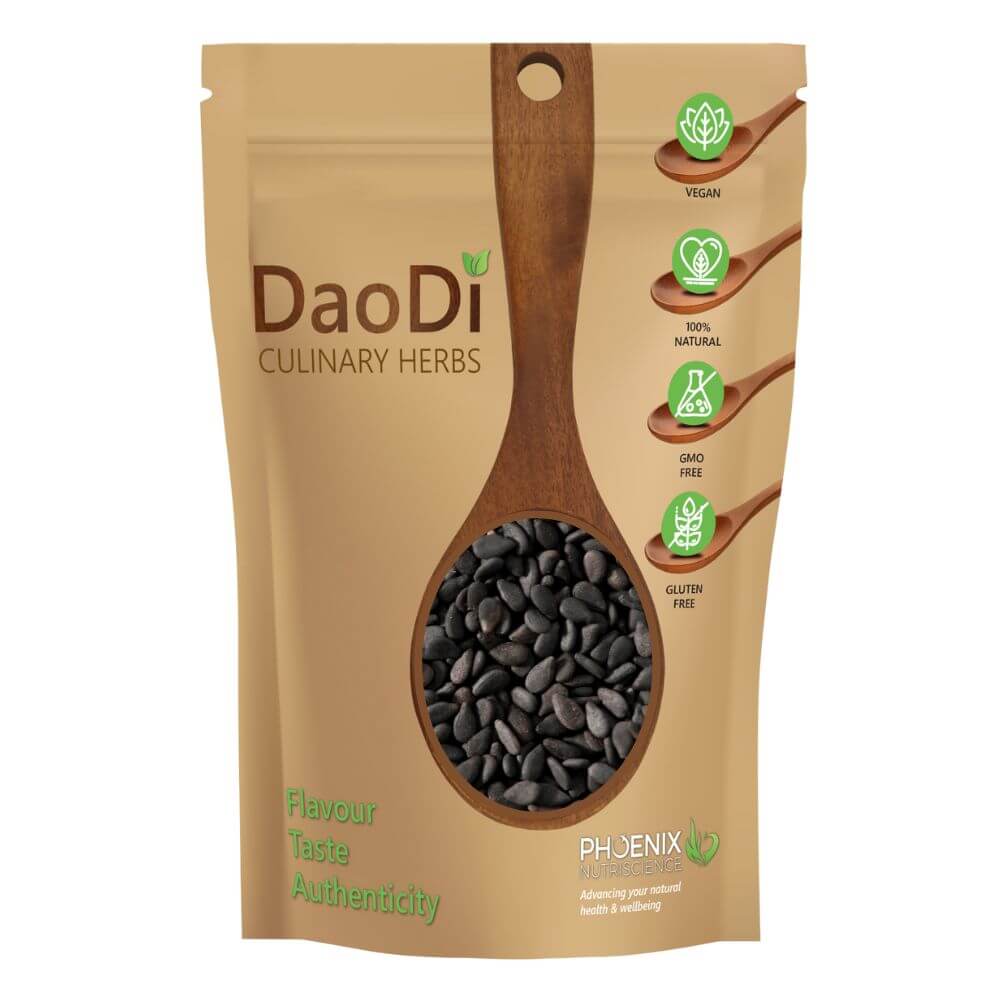
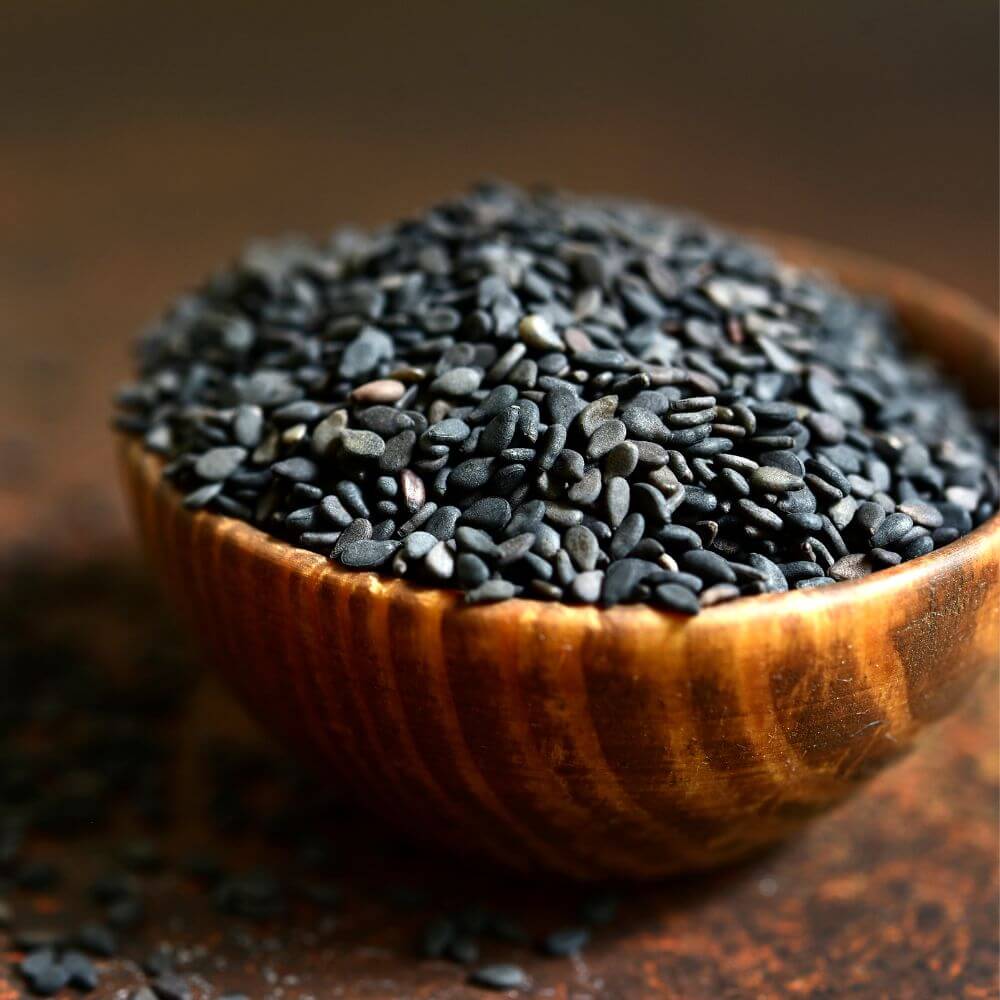
Black sesame seeds (Hei Zhi Ma) are the whole, unhulled seeds of the black-seeded sesame plant, a staple of Chinese desserts, breakfasts and home cooking.
- English name
- Black sesame seed
- Chinese
- 黑芝麻 (Hei Zhi Ma)
- Latin name
- Sesamum indicum
- Format
- Whole dried seeds, 100g
- Allergen
- Contains sesame
The story of Hei Zhi Ma
Sesame is one of the oldest oilseed crops known, cultivated for thousands of years across Asia and Africa. The plant, Sesamum indicum, grows tall stems lined with pale, bell-shaped flowers, and each flower leaves behind a slim pod packed with tiny seeds. When the pods ripen and split open, they scatter their seeds, which is said to be the origin of the famous phrase "open sesame".
Sesame seeds come in several colours. White and golden seeds are the most familiar in Western kitchens, but in China the black-seeded variety has a special place. Known as Hei Zhi Ma, literally "black sesame", it is the form recorded in the Chinese Pharmacopoeia and the one most closely tied to traditional food culture.
In traditional Chinese practice, black sesame is described as sweet and neutral in nature, and it belongs to the group of everyday foods valued for nourishment rather than as remedies. We share this as cultural heritage, not as a health claim.
Black sesame is everywhere in Chinese food. It fills tangyuan, the glutinous rice balls eaten at the Lantern Festival and the winter solstice. It is ground and cooked into zhi ma hu, a smooth black sesame soup served as a warming dessert or breakfast, and it is pressed into sweet sesame brittle and pastries. In recent years black sesame has also become a favourite flavour in British cafés and bakeries, from lattes to ice cream.
What's in your pack
Each bag contains whole, unhulled black sesame seeds and nothing else: no added salt, sugar, oil or preservatives. The seeds are left in their natural state, so you can toast, grind or soak them exactly as your recipe needs. One bag is enough for several batches of sesame soup, paste or porridge topping.
How our black sesame is sourced
Our black sesame is DaoDi-sourced. DaoDi is a traditional Chinese term for ingredients grown in the region long regarded as producing the finest quality of that particular plant, where soil, climate and generations of growing experience come together. Learn more about DaoDi herbs.
How to toast black sesame seeds
- Rinse the seeds in a fine sieve and drain well, or use them straight from the bag if you prefer.
- Tip them into a dry frying pan over a low to medium heat. Do not add oil.
- Stir constantly for 3–5 minutes. The seeds are ready when they smell fragrant and start to pop.
- Spread on a plate to cool completely before grinding or storing.
Making black sesame paste
Grind toasted, cooled seeds in a spice grinder or high-speed blender. Keep going past the powder stage and the natural oils will turn it into a thick paste. A small spoonful of honey or a pinch of salt can be added to taste. Keep homemade paste in a sealed jar in the fridge and use it within a week.
Loose seeds or concentrated granules?
| Whole seeds | Concentrated granules | |
|---|---|---|
| Preparation | Toast, grind, soak or cook | Dissolve in hot water in seconds |
| Best for | Cooking, baking, homemade pastes | Quick drinks at home or on the go |
Ideas to try with our black sesame
- Black sesame soup (Zhi Ma Hu): blend ground seeds with water and a little rice, then simmer until smooth.
- Breakfast porridge: stir a spoonful of ground seeds into oats with dried jujube dates and goji berries.
- Black and white rice: cook with black soybeans for a traditional "black foods" dish.
- Bakes: fold whole seeds into bread dough, cookies or crackers.
Cooking ideas
Whole seeds add crunch and colour scattered over noodles, stir-fried greens, tofu and rice bowls. Ground seeds can be whisked into dressings, stirred into smoothies or swirled through yoghurt, and black sesame paste makes a striking filling for buns, mochi and swiss rolls. For desserts, try black sesame in panna cotta, ice cream or a simple sesame brittle with honey.
Storing your pack
Sesame seeds are rich in natural oils, so they keep best away from heat and light. Store in an airtight container in a cool, dark cupboard, or in the fridge in warm weather, and use by the best-before date on the pack. Toasted or ground seeds should be used within a couple of weeks.
Who should take care
Sesame is one of the 14 major food allergens in the UK and can cause severe allergic reactions. Do not use if you are allergic to sesame, and take care to avoid cross-contact when preparing food for others. If you are pregnant or breastfeeding, or have a medical condition, speak to your GP or pharmacist before using it in larger amounts than normal food use. This product is a food and is not intended to diagnose, treat or prevent any disease.
Sources: Pharmacopoeia of the People's Republic of China (2020), Volume I, Hei Zhi Ma (Sesami Semen Nigrum), p. 359 · Royal Botanic Gardens, Kew, Plants of the World Online: Sesamum indicum.
Black Sesame Seeds FAQs
Do I need to wash black sesame seeds before using them?
Are these black sesame seeds hulled or unhulled?
Can I use black sesame instead of white sesame in recipes?
Why are some seeds slightly grey or brown?
Can I sprout black sesame seeds?
Black Sesame Seeds reviews
Why not also explore...