Makes a lovely hot drink. Highly recommended.



This site is protected by hCaptcha and the hCaptcha Privacy Policy and Terms of Service apply.
About our Dried Chrysanthemum Flower Buds
At a glance
Tai Ju are young chrysanthemum flower buds, picked before they fully open and dried whole for brewing one of China's best-known flower teas.
- English name
- Chrysanthemum flower buds
- Chinese
- 胎菊 (Tai Ju); 菊花 (Ju Hua)
- Latin name
- Chrysanthemum × morifolium
- Format
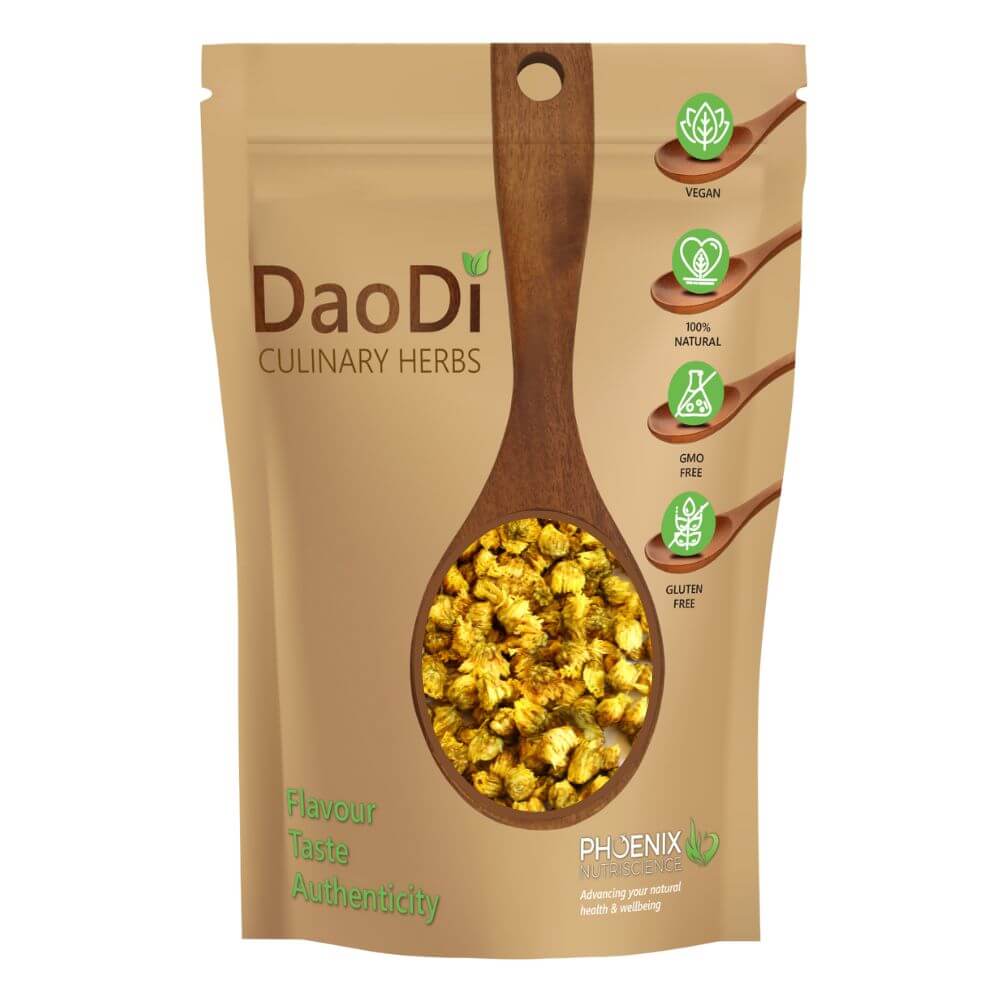
- Whole dried flower buds, 50g
- Caffeine
- None
The story of chrysanthemum tea
The chrysanthemum has been grown in China for more than 2,500 years and is one of the country's most celebrated flowers. Together with the plum blossom, orchid and bamboo, it is one of the "Four Gentlemen" of Chinese art and poetry, prized for blooming late in autumn after other flowers have faded.
The plant used for tea, Chrysanthemum × morifolium, belongs to the daisy family (Asteraceae). Its dried flower heads are known in Chinese as Ju Hua, and they are recorded in the Chinese Pharmacopoeia. Tai Ju, which means "embryo chrysanthemum", are the tightly closed young buds, harvested early in the flowering season before the petals unfurl. Because they are picked so young, a single cup takes many more buds than open flowers, and buds are often considered the premium choice for tea.
Chrysanthemum tea has been brewed in China since at least the Song dynasty, and it is now served in dim sum restaurants and tea houses around the world, often with a few goji berries floating in the cup. In traditional Chinese practice, chrysanthemum is described as slightly cool in nature and has long been enjoyed as a drink in warm weather. We share this as cultural heritage, not as a health claim.
The ninth day of the ninth lunar month, the Double Ninth Festival, is traditionally celebrated with chrysanthemum viewing and chrysanthemum wine, a custom that dates back over a thousand years.
Chrysanthemum in Chinese culture
The flower has inspired Chinese poets for centuries. The Jin dynasty poet Tao Yuanming, who left court life to farm, wrote of picking chrysanthemums by his eastern fence while gazing at the southern hills, and the lines became a symbol of a simple, peaceful life. The chrysanthemum later travelled to Japan, where it became the emblem of the imperial family, and today it is grown in gardens worldwide.
What's in your pack
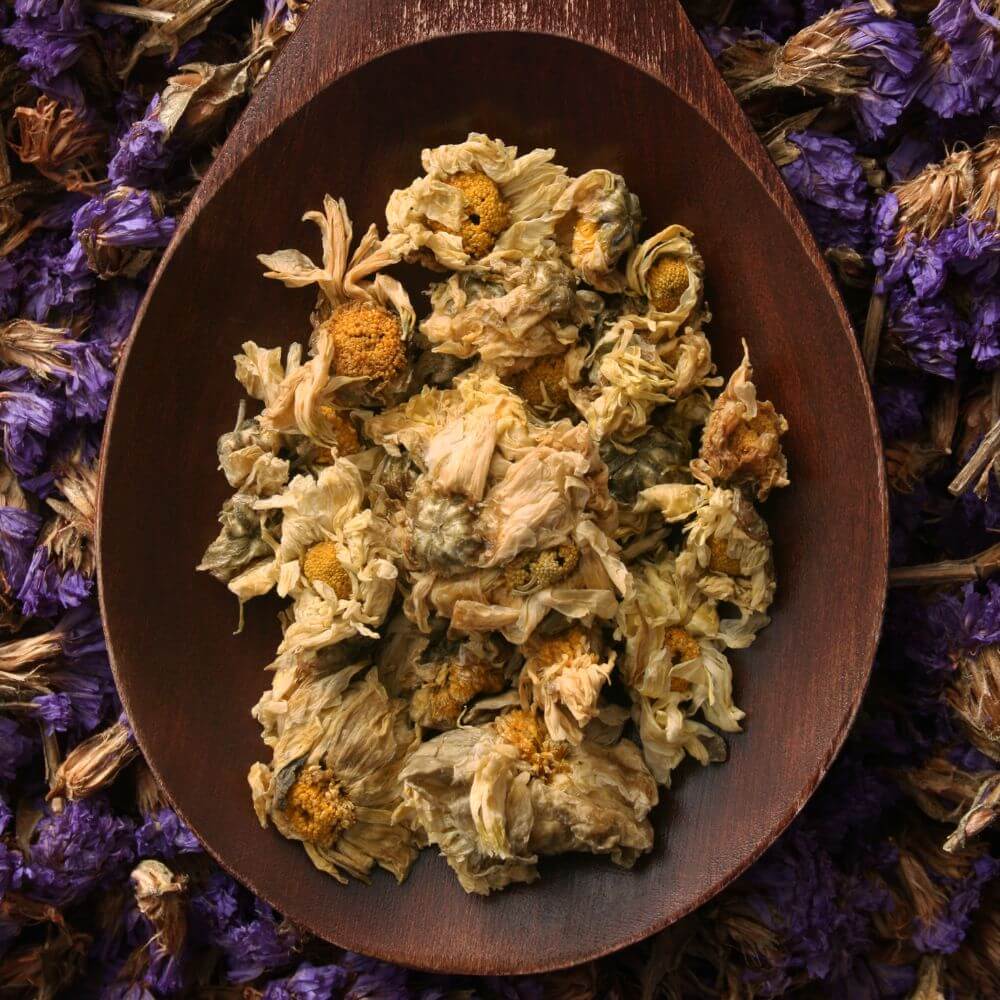
Each bag contains whole dried chrysanthemum buds and nothing else: no added flavourings, sweeteners or preservatives. The buds are small, round and pale yellow to creamy white, with tightly packed petals that slowly open as they steep. Because each bud is a whole flower, you may notice small variations in size and colour.
How our chrysanthemum is sourced
Our chrysanthemum buds are DaoDi-sourced. DaoDi is a traditional Chinese term for herbs grown in the region long regarded as producing the finest quality of that particular plant, where soil, climate and generations of growing experience come together. Learn more about DaoDi herbs.
Why sulphur-free matters
Dried flowers are sometimes fumigated with sulphur to keep their colour bright. It can leave residues and cause reactions in people sensitive to sulphites. Our chrysanthemum buds are left untreated, so their colour is natural and may be slightly paler than sulphured flowers.
How to make chrysanthemum tea
- Place 6–8 buds in a cup or teapot.
- Pour over water just off the boil, at around 90°C.
- Cover and steep for 5 minutes, until the buds open and the tea turns pale gold.
- Drink as it is, or add a little rock sugar or honey.
A glass teapot or cup lets you watch the buds open, which is part of the pleasure of this tea.
Flower and herbal blends to try
- Chrysanthemum and goji: add 5–6 goji berries to each cup, the way it is served in many tea houses.
- Chrysanthemum and honeysuckle: steep with a few honeysuckle flowers for a simple two-flower tea.
- Chrysanthemum and rosebud: combine with dried rosebuds for a two-flower tea.
- Chrysanthemum and pu-erh (Guk Pou): the classic dim sum pairing of chrysanthemum with dark tea.
Other ways to use chrysanthemum
Brew a strong pot, chill it and serve over ice with lemon in summer. Chrysanthemum tea can be used as the base for jellies and sorbets, or added to simple syrups for cocktails and mocktails. Steeped petals can be scattered over salads and desserts as a decorative finish.
Storing your pack
Dried flowers are delicate and absorb moisture and smells easily. Keep the buds in an airtight tin or jar in a cool, dry, dark cupboard, away from coffee and spices. Use by the best-before date on the pack.
Who should take care
Chrysanthemum belongs to the daisy family, so avoid it if you are allergic to daisies, ragweed, marigolds or related plants. If you are pregnant or breastfeeding, take regular medication or have a medical condition, speak to your GP or pharmacist before drinking it regularly. This product is a food and is not intended to diagnose, treat or prevent any disease.
Sources: Pharmacopoeia of the People's Republic of China (2020), Volume I, Ju Hua (Chrysanthemi Flos), pp. 323–324 · Royal Botanic Gardens, Kew, Plants of the World Online: Chrysanthemum × morifolium.
Dried Chrysanthemum Flower Buds FAQs
What is the difference between Tai Ju and Ju Hua?
Both come from the same chrysanthemum plant. Tai Ju are young, unopened buds, while Ju Hua are the fully opened flower heads. Buds are smaller and you use more per cup.
Can I drink chrysanthemum tea cold?
Yes. Brew a stronger pot, let it cool and keep it in the fridge. Serve within a day over ice.
Why do some buds float and others sink?
Dried buds are light and float at first. As they absorb water and open, many sink. Both are normal.
How many times can I re-steep the buds?
Usually two to three times. Each infusion becomes lighter, so you can add a few fresh buds to the pot.
Are these the same chrysanthemums sold as garden flowers?
They are the same species, but tea chrysanthemums are grown and dried specifically for food use. Do not brew flowers from florists or garden centres, which may have been treated with chemicals.
Dried Chrysanthemum Flower Buds reviews
Why not also explore...