
This site is protected by hCaptcha and the hCaptcha Privacy Policy and Terms of Service apply.
About our Mung Beans
About Our Mung Beans
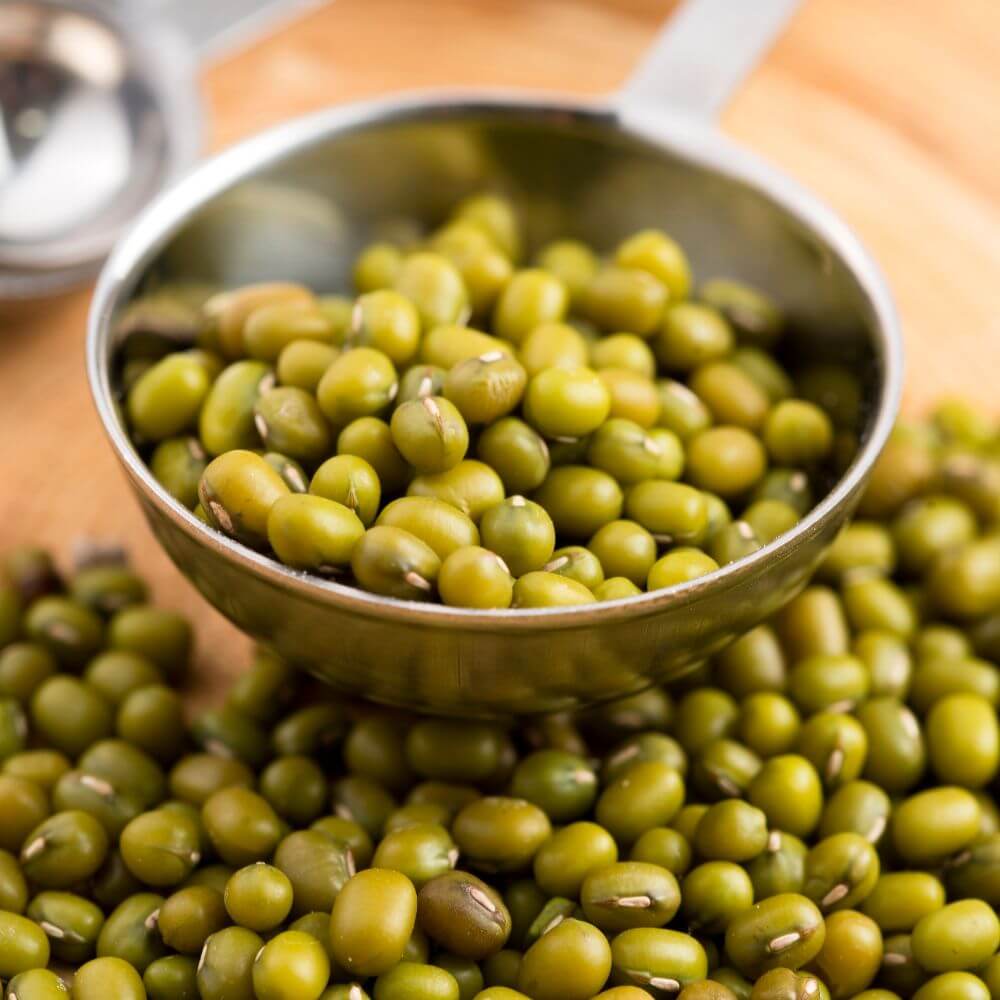
Mung beans (Lu Dou / Luk Dou) are small, olive-green pulses with a mild, slightly sweet flavour and a soft texture once cooked. Also sold as green mung beans, moong beans or green gram, they are one of the most widely used beans in Chinese, Indian and South-East Asian cooking.
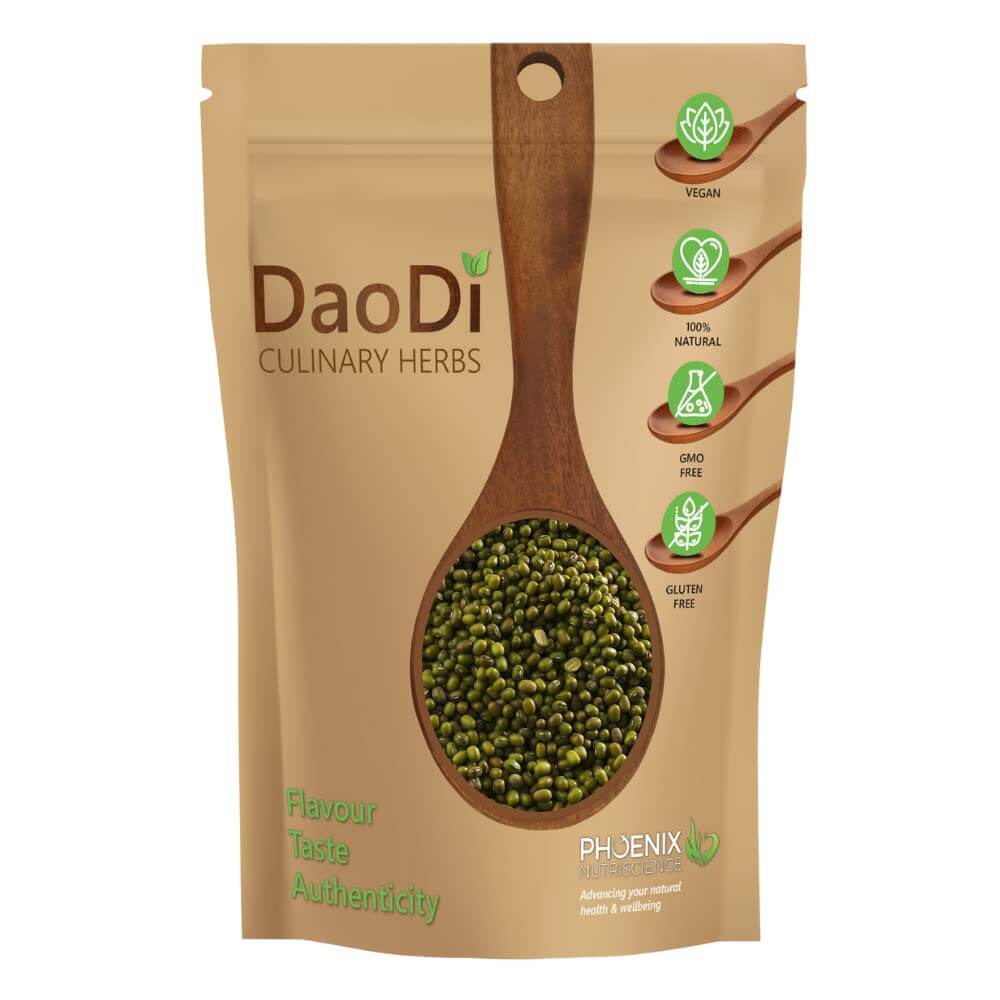
Our 100g pack holds whole, dried mung beans, unsplit and with the skin on. They cook faster than most dried beans, work in both sweet and savoury dishes, and are the beans used for growing your own bean sprouts at home.
Mung beans sit alongside Red Adzuki Beans (Hong Dou) and Soya Beans (Huang Dou) in our pulses range, and are classically cooked with Dried Lily Bulb (Bai He) in sweet soups.
Potential Benefits
Plant Protein: Like other pulses, mung beans are a natural source of plant-based protein and fibre.
Everyday Nutrition: They naturally contain minerals such as potassium and magnesium, and fit easily into a varied, balanced diet.
Traditional Favourite: Mung bean soup has long been a summer staple in Chinese home cooking, traditionally served chilled on hot days.
Plant Based: Suitable for vegan, vegetarian and flexitarian cooking.
Versatile: Soups, dal, curries, salads, desserts and sprouting all start from the same bag.
How to Cook Mung Beans
We suggest around 50g of dried mung beans per portion.
- Rinse the beans and pick out any small stones.
- Soaking is optional. Whole mung beans cook without soaking, but an hour or two in cold water shortens the cooking time.
- Simmer in about three times their volume of water for 25 to 35 minutes (unsoaked) or 20 to 25 minutes (soaked), until soft. For a looser soup, use more water.
- To sprout: soak overnight, drain, then rinse and drain twice a day for two to four days until shoots appear. Use within a few days.
Always cook mung beans thoroughly before eating. You can find more ideas in our blog on 5 fantastic uses for green mung beans.
Store in an airtight container in a cool, dry place, away from direct sunlight.
Why Choose Vita?
Every herb we sell at Vita Herbal Nutrition is chosen for use in the kitchen and in traditional preparation.
Our whole range is 100% non-sulphur treated. Sulphur is widely used to brighten the colour and extend the shelf life of dried herbs, but it changes the ingredient's natural character and can cause reactions in some people. Read more on our non-sulphur treated herbs page.
We follow the DaoDi principle of choosing each herb from the area traditionally associated with it, and we have worked with the same supply partners since 2010.
FAQ
Are mung beans the same as green gram and moong beans?
Yes. Green gram and moong beans are other names for the same whole green mung bean. Split, skinless mung beans are usually sold as moong dal.
Do mung beans need soaking?
No. Whole mung beans can be cooked straight from dry in around 30 minutes. A short soak simply shortens the cooking time.
How long do mung beans take to cook?
Around 25 to 35 minutes from dry, or 20 to 25 minutes after soaking, until the beans are soft and starting to split.
Can I sprout these mung beans?
Yes. Soak them overnight, then rinse and drain twice daily until shoots appear, usually in two to four days.
What do mung beans taste like?
Mild, earthy and slightly sweet, which is why they suit both savoury dishes and Chinese sweet soups.
Are they suitable for a plant-based diet?
Yes, mung beans are entirely plant-based and suit vegan and vegetarian cooking.
Mung Beans reviews
No reviews yet. Be the first to review Mung Beans.
Why not also explore...