


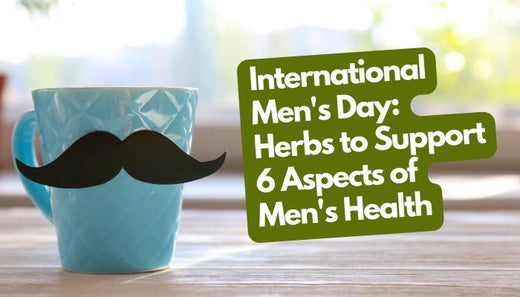
As we commemorate International Men's Day, it's a good moment to talk openly about men's wellbeing and the traditions that have grown up around it. Drawing from the wealth of knowledge in herbal nutrition, we can explore traditional culinary herbs that have been enjoyed for centuries as part of daily routines. Herbs are not a treatment or cure for any condition. If you have symptoms or concerns about any aspect of your health, speak to your GP first.

What is International Men's Day?
International Men's Day (IMD) is an annual observance held on November 19th to appreciate and advocate for positive aspects of masculinity while raising awareness about global men's issues. This day aims to spotlight men's contributions and accomplishments across different fields, shedding light on the hurdles they may encounter concerning health, well-being, and societal expectations. It provides a platform to discuss topics like mental health, challenging stereotypes of masculinity, and toxicity and emphasises the significance of positive fatherhood.
Observed in numerous countries worldwide, IMD encourages open dialogues about men's unique experiences and struggles, ultimately contributing to a more comprehensive understanding of gender-related issues. It serves as a day to recognise the varied journeys of men and to foster the development of a more supportive society.

Six Areas of Wellbeing, and the Herbs Traditionally Linked to Them
Below are six areas of wellbeing men often think about, and the herbs Chinese tradition has long associated with each. These are traditional associations rather than medical claims.
Always seek advice from your GP about any health concern, and from a qualified TCM practitioner before taking any herbs. They are meant for complementary use, not a replacement, treatment, or a cure.
Whether it is for yourself, a partner, family, or even a friend, here are the six areas:
1. Prostate Awareness


2. Vitality

The clue's in the name! Horny Goat Weed has been included in traditional Chinese formulations associated with vitality for centuries, and its colourful name comes from old herding folklore. Why not try it in capsule form as part of your daily routine?

San Qi, or notoginseng, is one of the most treasured roots in Chinese herbal practice, traditionally associated with circulation and recovery. It belongs to the same plant family as ginseng and has been prized in traditional preparations for centuries.

3. Stress and Mental Health

Also known as "golden root" or "Arctic root," Rhodiola grows in cold parts of Europe and Asia and has a long history of traditional use. It belongs to the group of herbs traditionally described as adaptogens and has long been taken during busy and demanding periods. The capsules are an easy way to add it into your daily routine.

Schisandra, the 'five flavour berry', is another herb from the adaptogenic tradition, traditionally associated with a sense of calm and focus. Try it brewed as a tea as part of an unwinding evening routine.

4. Heart Health Awareness

Dang Shen, or codonopsis root, is one of the gentlest and most familiar tonic roots in Chinese tradition, often called the everyday alternative to ginseng. It is traditionally simmered into family soups and broths as part of a balanced routine, and its mild, faintly sweet character makes it easy to cook with.

Hawthorn, known as Shan Zha, holds a significant place in Chinese tradition, where it is most classically enjoyed after rich meals and is traditionally associated with digestion. In Western folk herbalism the berry has long been linked with the heart as a matter of heritage, which is why it so often appears in traditional preparations on both sides of the world.

5. Staying Active
Aches and stiffness from work, exercise, and age are familiar to most men. Persistent pain should always be checked by a GP.


6. Everyday Resilience


Summary
In celebration of International Men's Day, why not explore the herbs and traditions above? Don't forget, it is OK to talk about men's health; opening up might just help a friend. And for anything health-related, your GP is always the right first port of call, with a qualified TCM practitioner able to advise on traditional use.
Discover the wide selection of Chinese herbs in our range.