
This site is protected by hCaptcha and the hCaptcha Privacy Policy and Terms of Service apply.
About our Dried Longan Fruit
Dried longan (Long Yan Rou) is the dried flesh of the longan fruit, a close relative of the lychee and a favourite ingredient in Chinese teas and sweet soups.
- English name
- Dried longan, longan flesh
- Chinese
- 龙眼肉 (Long Yan Rou)
- Latin name
- Dimocarpus longan
- Format
- Dried fruit flesh (aril), 100g
- Caffeine
- None
The story of Long Yan Rou
The longan tree, Dimocarpus longan, is a large evergreen in the soapberry family (Sapindaceae), grown across southern China and South-East Asia. It is a close cousin of the lychee and rambutan. Its fruit grow in heavy clusters, each with a thin, tan shell, translucent white flesh and a single glossy dark seed.
That seed gives the fruit its name. Long Yan means "dragon's eye", because a peeled longan, with its pale flesh and dark centre, looks like an eye looking back at you. Long Yan Rou means "dragon eye flesh", and it is this flesh, botanically called the aril, that is dried and sold.
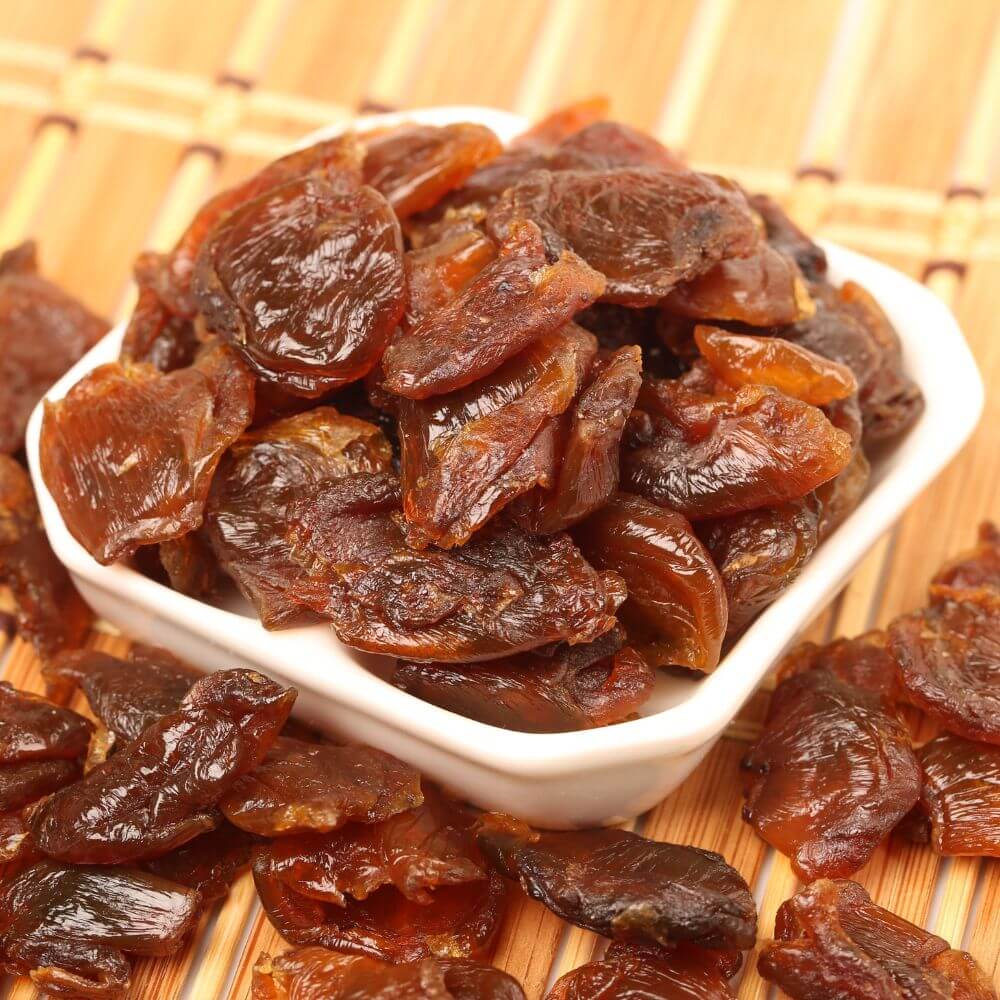
Fresh longans are only in season for a few weeks each summer, so drying has long been the way to enjoy them all year round. Drying turns the flesh deep amber-brown, soft and slightly chewy. In traditional Chinese practice, longan flesh is described as warm in nature and has long been used in comforting teas and sweet soups, especially in colder months. We share this as cultural heritage, not as a health claim.
Dried longan appears in many festive and family dishes, from eight treasures rice to the sweet dessert soups known as tong sui, and it is a familiar sight in Chinese grocery stores across the UK.
Fresh and dried longan
In the UK, fresh longans appear in Asian grocers for a short season, usually in late summer, and are eaten peeled like grapes. Dried longan is a different ingredient altogether. Drying concentrates the fruit, darkens the colour and changes the texture from juicy to soft and chewy, which is why dried longan is used for teas, soups and baking rather than as a fresh fruit substitute.
What's in your pack
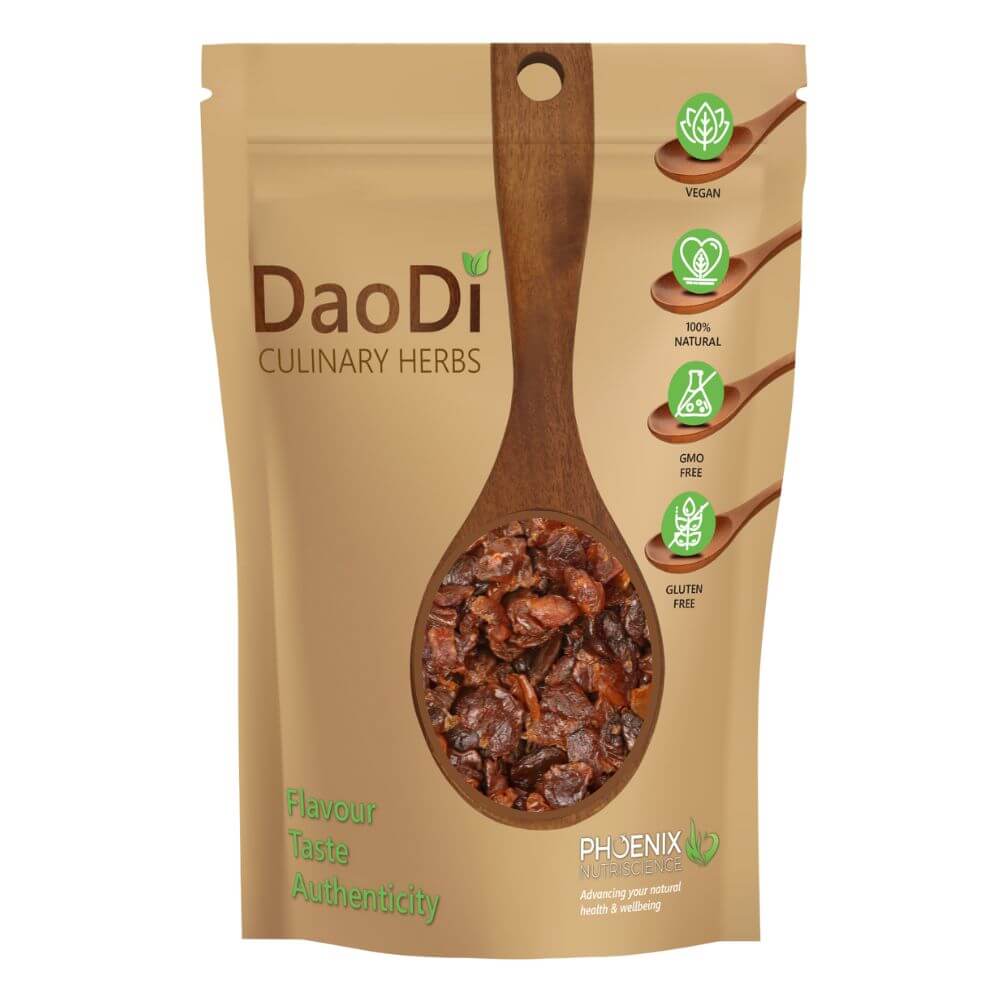
Each bag contains dried longan flesh with the shells and seeds already removed, so it is ready to use. Nothing is added: no sugar, syrup or preservatives. The pieces are soft and sticky, and they often cling together in small clusters. Simply pull them apart before using.
How our longan is sourced
Our dried longan is DaoDi-sourced. DaoDi is a traditional Chinese term for ingredients grown in the region long regarded as producing the finest quality of that particular plant, where soil, climate and generations of growing experience come together. Learn more about DaoDi herbs.
Why sulphur-free matters
Dried fruit is sometimes treated with sulphur to keep it pale and extend shelf life. It can leave residues and cause reactions in people sensitive to sulphites. Our longan is left untreated, which is why it has a naturally deep amber colour.
How to make longan tea
- Rinse 10–15g of dried longan (about 8–10 pieces) in warm water.
- Add to a pan with 500ml of water and bring to the boil.
- Lower the heat and simmer for 15 minutes.
- Pour into cups and eat the softened fruit too.
For a quicker cup, steep the pieces in freshly boiled water for 10 minutes with a lid on.
Loose dried longan or concentrated granules?
| Dried longan | Concentrated granules | |
|---|---|---|
| Preparation | Simmer or steep, then eat the fruit | Dissolve in hot water in seconds |
| Best for | Teas, sweet soups, porridges, baking | Quick drinks at work or when travelling |
Ideas to try with our longan
- Longan and red date tea: simmer with 4–5 dried jujube dates, a classic winter pairing.
- Longan, goji and red date tea: add a small handful of goji berries for the last 5 minutes.
- Sweet lotus seed soup: cook with lotus seeds and dried lily bulb until tender.
- Longan rice pudding: stir chopped longan into rice pudding or congee as it cooks.
Cooking ideas
Dried longan is a lovely addition to baking. Chop it into muffins, flapjacks, granola and fruit loaves, or use it in place of raisins in scones. It works in winter fruit compotes and mulled drinks, and soaked longan can be blended into smoothies or folded into yoghurt and overnight oats.
Storing your pack
Dried longan is soft and contains natural sugars, so it can absorb moisture. Keep it in an airtight container in a cool, dry place, or in the fridge in warm or humid weather. Use by the best-before date on the pack.
Who should take care
Dried longan is a concentrated source of natural fruit sugars. If you have diabetes, are pregnant or breastfeeding, take regular medication or have a medical condition, speak to your GP or pharmacist before using it in larger amounts than normal food use. This product is a food and is not intended to diagnose, treat or prevent any disease.
Sources: Pharmacopoeia of the People's Republic of China (2020), Volume I, Long Yan Rou (Longan Arillus), p. 100 · Royal Botanic Gardens, Kew, Plants of the World Online: Dimocarpus longan.
Dried Longan Fruit FAQs
Do I need to remove seeds from your dried longan?
What is the difference between longan and lychee?
Can I eat dried longan as a snack?
Why is dried longan sticky?
Can I soak dried longan before using it in baking?
Dried Longan Fruit reviews
Why not also explore...